An industry association offers your SaaS a webinar slot, newsletter placement, and a sponsor logo. Before committing, confirm which members you can help, what the organization will deliver, and what result would justify the cost.
Start with a small project for one member segment. Give participants something useful, offer an appropriate follow-up, and budget enough time to evaluate the result. This guide helps you decide whether an association or professional community deserves that first test.
Check audience overlap before comparing packages
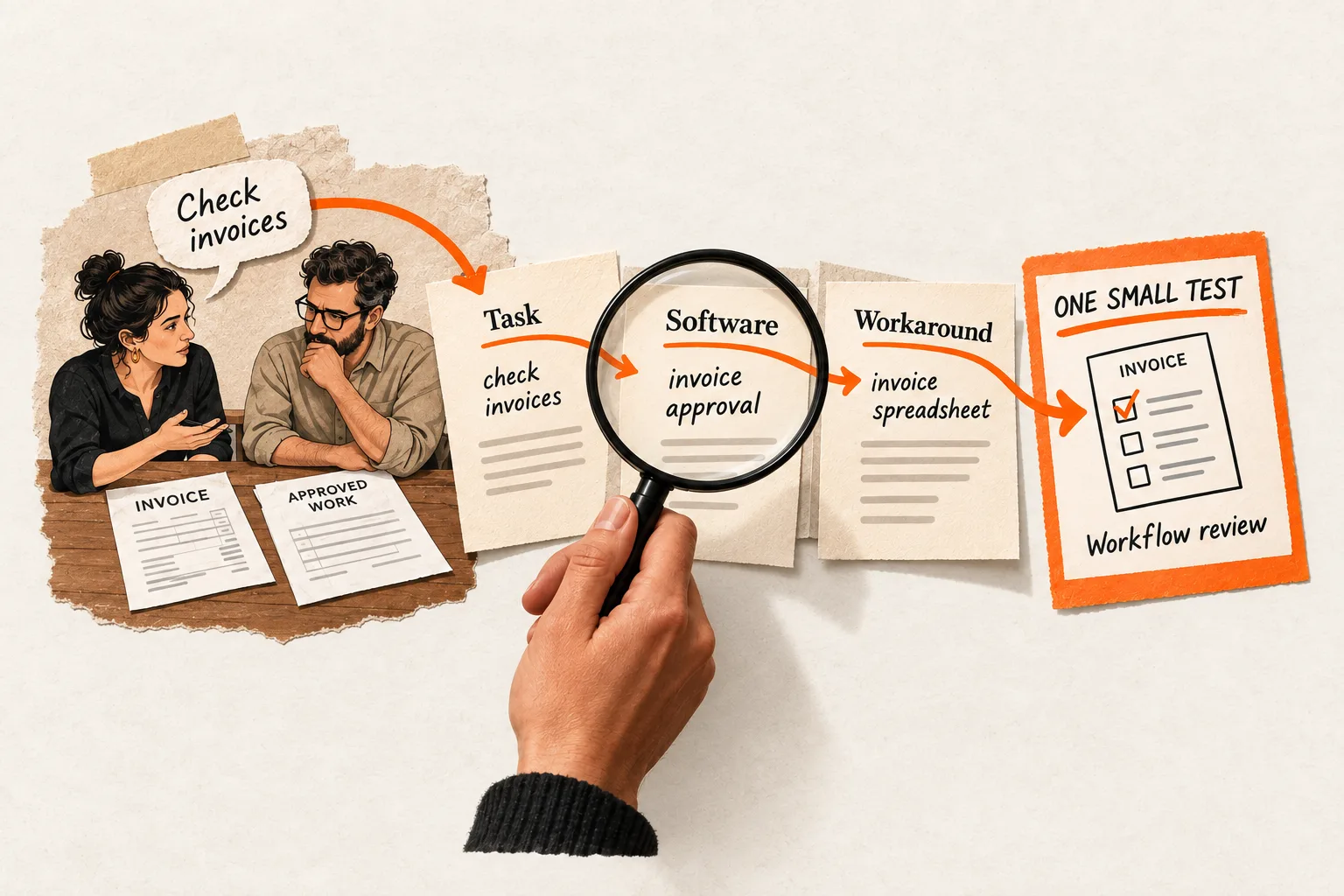
Write down the customer you want to reach before opening a sponsorship brochure. Include their role, company type, recurring problem, and the circumstances that make your product useful.
“Construction companies” leaves too much room for interpretation. “Operations managers at small remodeling firms who reconcile field notes with office records every week” gives you something to check against a partner’s audience.
Build a short list using public programming, member profiles, discussion topics, and past event descriptions. Ask each organizer:
- Which member segment would receive this specific invitation?
- What roles and company sizes attended comparable sessions?
- Which questions does that segment repeatedly bring to the organization?
- What is known about active participation beyond total membership?
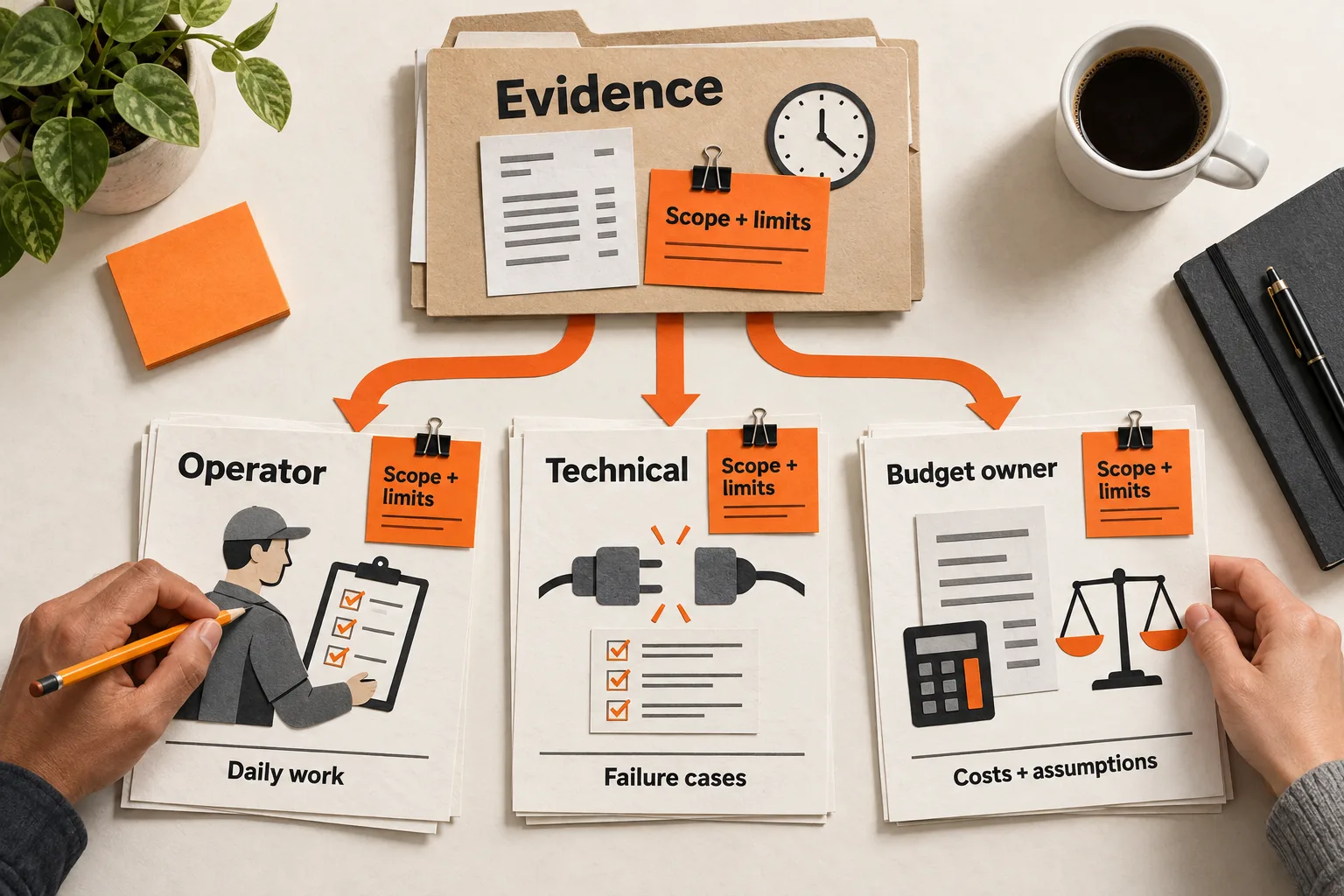
Keep the organizer’s statements separate from your conclusions. An event topic suggests interest; it does not establish purchasing authority or demand for your software. If audience information is missing, record the gap and reduce your commitment accordingly.
For example, NARI offers industry partner membership for companies serving the remodeling industry, with packaged tiers and customized options. Its program gives you a candidate to investigate. You still need to confirm the relevant member segment and specific deliverables. NARI’s industry partner program
Offer a contribution members can use immediately
Describe what members should be able to accomplish after participating. A workflow clinic might help them identify a missed handoff. A worksheet could help them evaluate conflicting vendor claims. A moderated discussion could collect practical approaches to a recurring operational problem.
Use actual member questions to shape the topic, keeping their original wording separate from your interpretation. Ask the organizer whether the proposed session addresses a current need. Broad interest in AI is insufficient evidence that members want an AI product demonstration.
Choose an outcome participants can achieve without buying your software. If your product appears, explain where it helps and what still requires human judgment. Use fictional or appropriately approved examples so participants can complete the exercise without exposing sensitive business records.
Allow time for editorial approval. The American Marketing Association expects learning partners to follow its competency framework and editorial guidelines. Its process can include submitted materials, committee review, and a subsequent partnership discussion if the materials meet its needs. AMA’s partnership process
Ask a smaller community the same practical questions: who approves the topic, who moderates, and how much promotion is acceptable?
Turn the partnership label into specific commitments
“Partner” can mean buying a placement, contributing an educational session, or jointly creating a resource. Write down the arrangement and what each side contributes.
For the organizer, specify the invitation audience, promotional placements, schedule, hosting responsibilities, and reporting. For your team, specify preparation, speakers, materials, revisions, and follow-up capacity. State any fee separately from the work.
Agree on the member experience and usage rights before registration opens:
- How will the sponsor relationship be described, and are product mentions or demonstrations permitted?
- Who can use the recording, slides, and organization’s logo afterward?
- What participant information will be shared, and what follow-up have participants agreed to receive?
- What happens if the event is canceled or a promised placement is missed?
CASE’s sponsored webinar guidelines illustrate why these details matter. They require measurable learning objectives, audience engagement, and advance slide review. They exclude sales pitches and product demonstrations, and describe live-event registration lists with opt-in/opt-out language. Those terms apply to CASE’s program; confirm the terms of your own arrangement. CASE’s sponsored webinar guidelines
Keep sponsorship and endorsement distinct in your proposal. Also confirm the permitted follow-up instead of assuming attendance authorizes a sales sequence. One option is for the organizer to distribute the resource and invite participants to request help from your team separately.
Design a pilot around a decision you can make
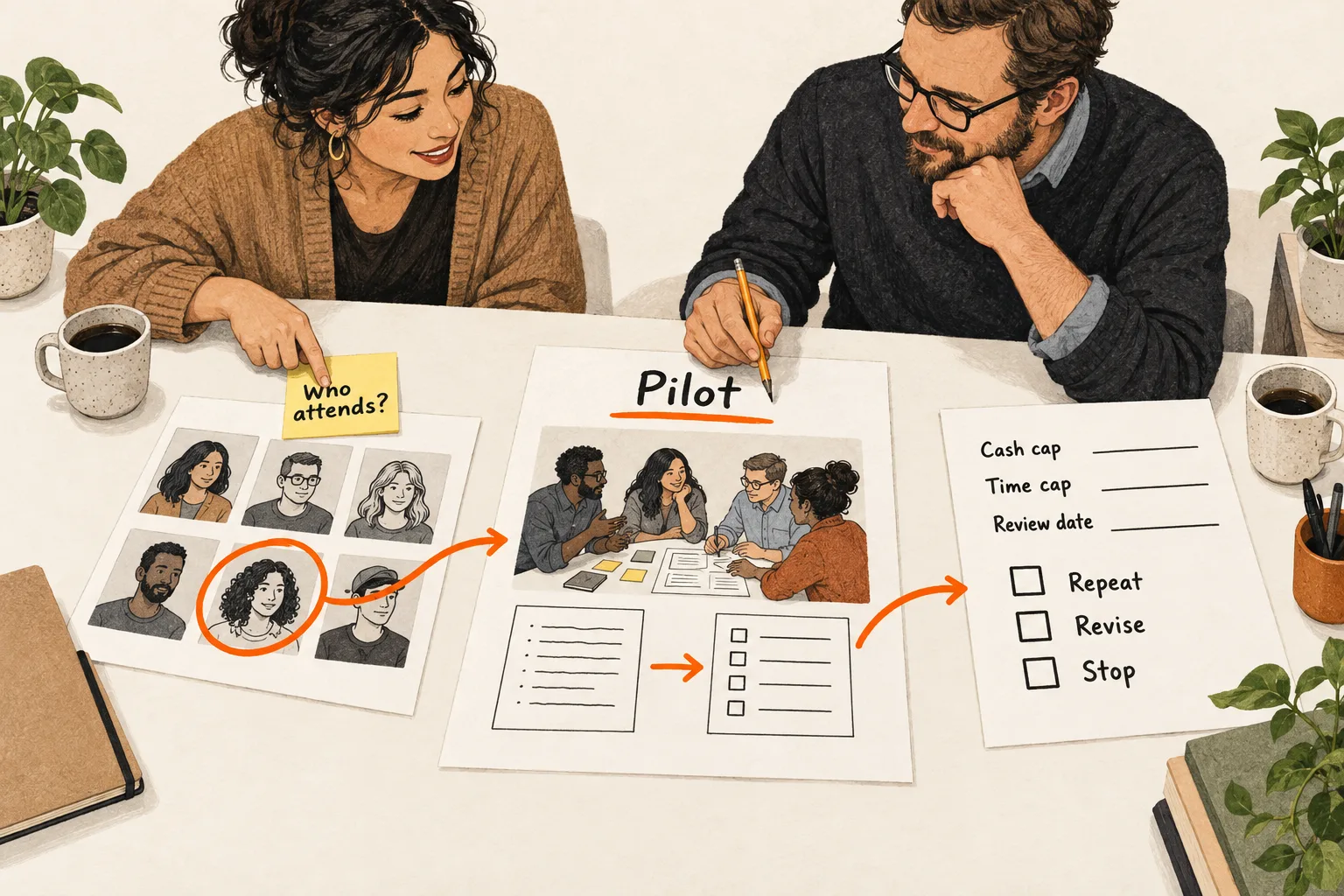
Choose one audience segment, one contribution, and one next step. Set a cost ceiling and review date before work begins.
The next step should follow naturally from the session. After a workflow clinic, participants might request a short review of their process. After a vendor-evaluation workshop, they might use the worksheet and optionally discuss a requirement. Consider how much commitment that requires before asking for a demo.
Keep delivery, audience fit, and commercial results separate in your record:
| What to assess | What to record |
|---|---|
| Delivery | Whether the agreed invitations, placements, and event support happened |
| Audience fit | Participants who matched the intended role, company type, and problem |
| Useful engagement | Relevant questions, completed exercises, or observable resource use |
| Commercial interest | Suitable participants who explicitly requested a product-related conversation |
| Later outcomes | Completed conversations, evaluations, and customers within the chosen follow-up window |
Define a qualified conversation before counting one. For example, require both a participant who fits your target profile and a discussion of a problem your product can address. Track requests and completed conversations separately.
Count people and companies where several attendees represent one account. Record existing prospects separately so you do not credit the partnership with discovering them.
Include preparation, revisions, rehearsal, delivery, and follow-up in the time budget. Track cash spending separately from the estimated value of founder hours. FindVex’s guide to calculating channel acquisition cost including founder time provides a worksheet for that distinction.
At the review date, use actual costs and completed outcomes. A small pilot can inform another test, but its participants may be unusually engaged. A second event may reach many of the same people. Check who remains reachable before projecting the result across the organization’s membership.
Worked hypothetical: a remodeling operations workshop
Suppose a two-person SaaS team offers software that turns field notes into draft project updates for human review. It is considering a regional remodeling community as a partner. The following terms and results are fictional planning examples.
The organizer identifies an operations subgroup and reports recurring questions about incomplete handoffs. The team proposes a 40-minute workshop: participants use a fictional job record to find missing information and build an update checklist. An optional workflow review is the next step.
The organizer would send two invitations to the subgroup and host the session. The founder would provide the exercise, worksheet, and presentation for approval. Afterward, the organizer would send the worksheet, with a separate invitation to request a founder conversation.
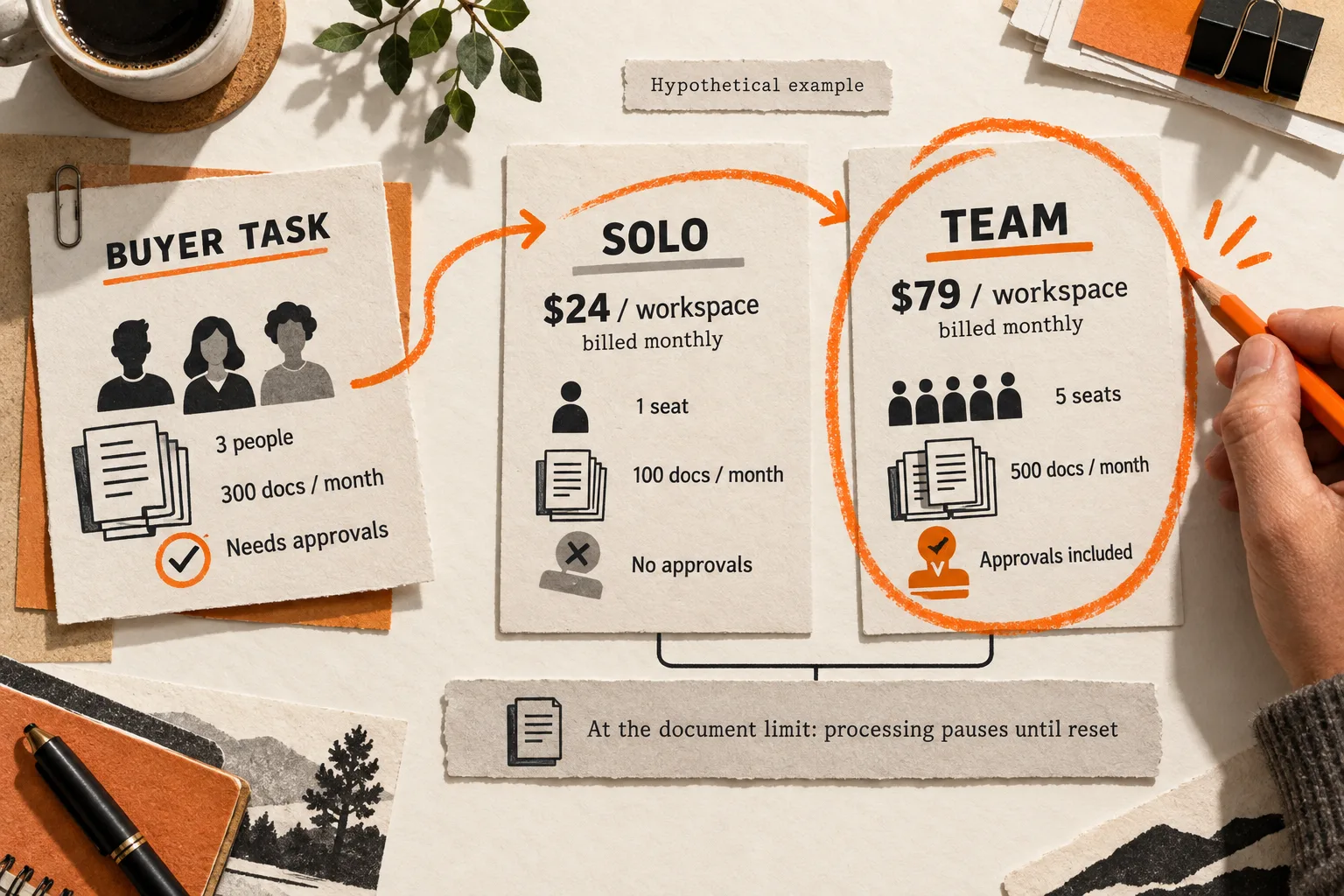
The team sets a $400 fee budget and a ceiling of 12 founder hours valued at $75 per hour, including follow-up. Its planned economic cost is $1,300: $400 in cash plus $900 for founder time. The hourly value is a planning assumption, not an additional cash payment.
Before starting, the team decides that four completed qualified workflow conversations within 30 days would justify considering another similarly sized test. For this example, each must involve a target operations manager discussing a handoff problem the software can address. Four is this team’s decision threshold, not an industry benchmark.
Imagine 18 people attend and 11 fit the target profile. Five of those 11 request a conversation; four complete one and meet the qualification criteria. If the team spends the budgeted $400 and uses all 12 hours, its economic cost per completed qualified conversation is $1,300 divided by four, or $325. Cash cost per completed qualified conversation is $100. Neither figure is customer acquisition cost because no customer outcome has been established.
Meeting the conversation threshold gives the team a reason to consider repeating the workshop. It should also confirm that the organizer can reach additional suitable members. If conversations reveal requirements the software cannot meet, revise the audience or contribution before renewing. If the promised invitations never went out, resolve that delivery failure before drawing conclusions about demand.
Fill out a partnership decision sheet
Copy this template for each candidate. Mark unknowns explicitly and identify who can resolve them.
Organization and contact:
Target member: role, company type, recurring problem
Why our product fits that problem:
Audience evidence: source, date, and what it establishes
Largest unanswered audience question:

Member outcome without purchasing:
Proposed session, resource, or activity:
Organizer commitments: owner, audience, placements, dates, reporting
Our commitments: owner, materials, revisions, delivery, follow-up
Approval process and deadline:
Sponsor disclosure and permitted promotion:
Recording, slides, and logo usage rights:
Participant data and agreed follow-up:
Cancellation or missed-deliverable terms:

Cash ceiling:
Time ceiling and hourly value:
Total planned economic cost:
Qualified conversation definition:
Outcome threshold and review date:
Repeat if:
Revise if:
Stop if:

Largest unresolved question:
Who can answer it and by when:
Resolve one unknown before committing
Choose one organization whose members discuss a problem your product addresses. Fill out the target member, audience evidence, and proposed member outcome first. Then draft a question for the organizer that resolves the largest gap, such as which subgroup would receive the invitation or who approves the workshop.
Use the answer to complete the pilot terms and cost ceiling before committing to a package.