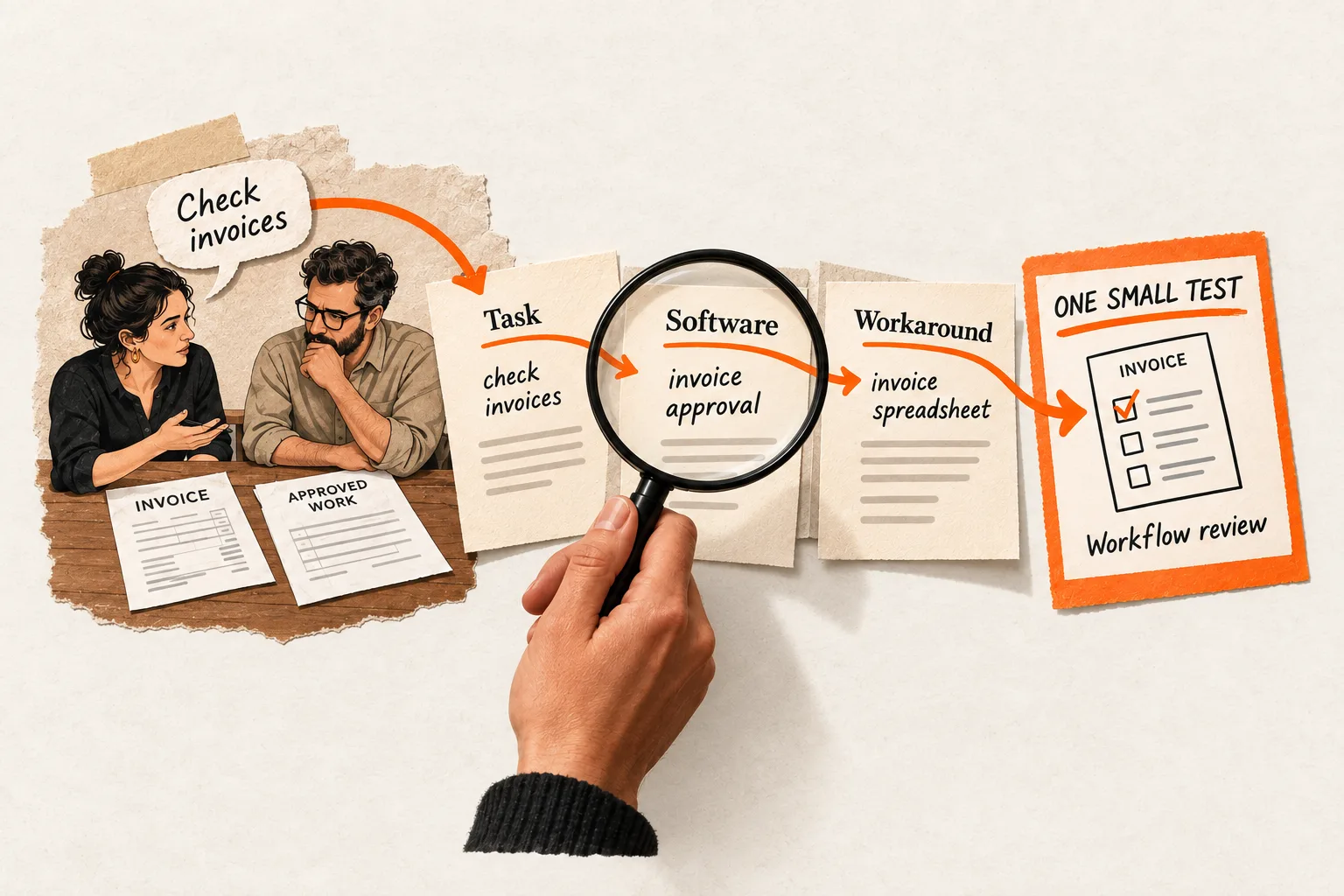
Before turning a product walkthrough into an email, three clips, and a slide deck, set a time limit for each version. Include the work of distributing it and reviewing the results. Then decide what response would justify making another.
A content repurposing effort budget gives a founder or small team a way to choose which versions deserve the additional work. Start with one existing asset and use the worksheet below to assign each proposed format an audience, an allowance, and a stop rule.
Give each format a specific job
Choose an asset that answers a real customer question. Identify the passage, demonstration, or example that another format could make easier to use.
A walkthrough might explain how to review an AI-generated answer before sending it to a customer. A short video could show the review action. An email could explain when to use it. A slide deck needs an equally specific purpose, such as giving a support lead a checklist to discuss with the team.
For each candidate, complete this sentence:
This format will help [specific audience] understand or do [one thing] in [place where we can reach them], then invite them to [useful next action].
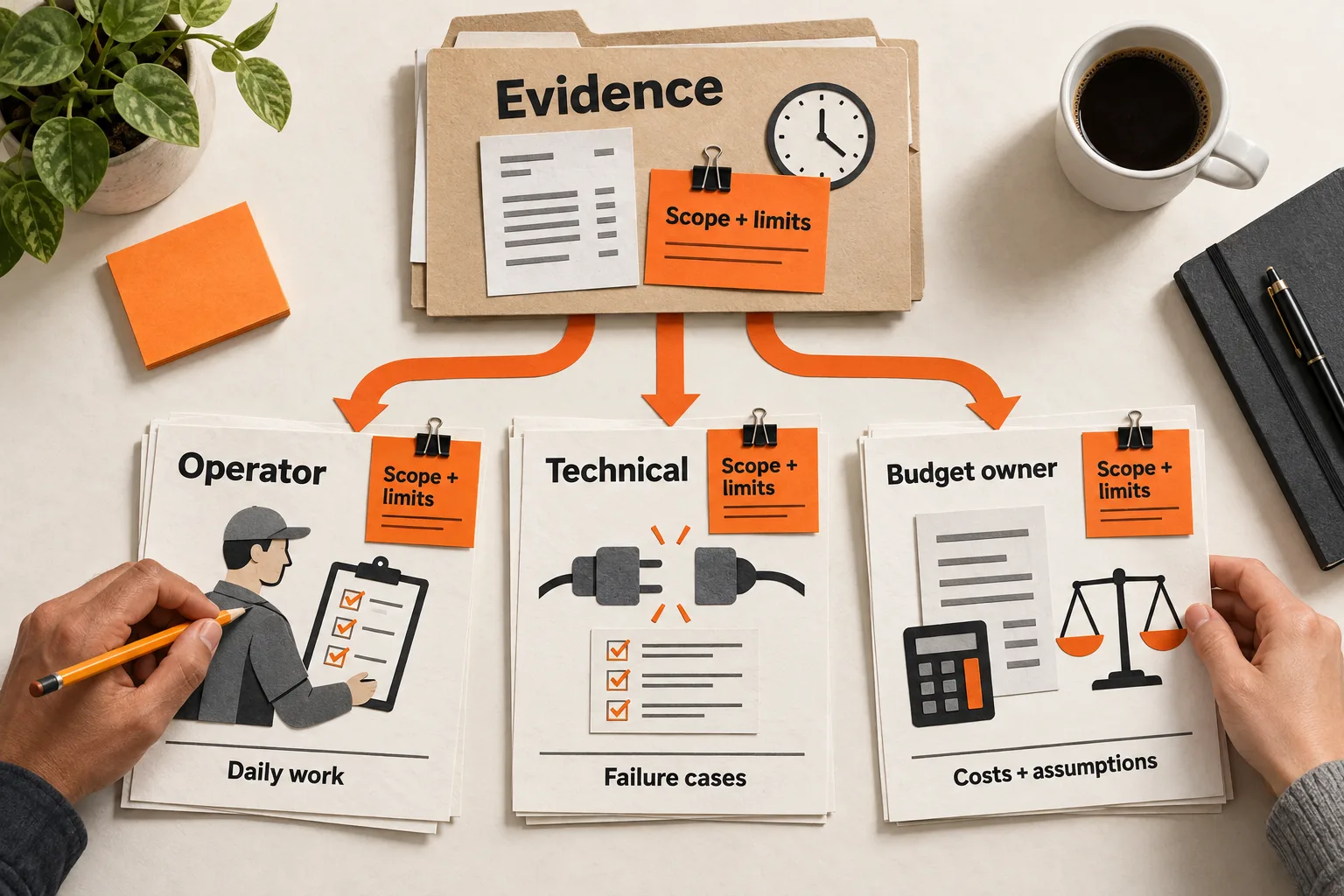
Add the evidence behind that choice: a recurring support question, a prospect’s stated confusion, or relevant community conversations. Keep the observation separate from your interpretation. A few comments can suggest a test without proving broad demand.
If the source asset lacks a clear reader question, use the SaaS content brief template before making more versions.
Count all the additional work
Estimate the labor required from selecting material through the first review of results:
Additional time = selection + adaptation + production + quality review + distribution + follow-up + measurement.
Selection means finding the right passage. Adaptation includes rewriting the opening and restoring context lost when a clip stands alone. Quality review covers claims, captions, screenshots, and links. Count preparing and placing the post under distribution, answering relevant questions under follow-up, and reviewing results under measurement. Give each task one place in the estimate.
AI assistance may shorten a step. Time the complete process before reducing the next allowance.
Record shared setup separately. If two formats use the same cleaned transcript, count that cleanup once in the batch total. If only a video requires a new recording, charge the recording to the video. Keep shared costs visible when comparing the whole experiment with other uses of your time.
The source asset’s original production time belongs in your overall content accounts. For the decision to make one more version, count the additional work still ahead.
Track cash alongside hours. Include new contractor fees and tool charges caused by the experiment; record existing subscriptions separately as overhead. Name the task the founder’s hours would otherwise serve, even when no invoice is involved.
Choose a useful response before allocating hours
Define a response narrowly enough that two teammates would count it the same way. For example, a qualified conversation could mean a reply from a support leader describing an active answer-review problem and asking a substantive follow-up question. A congratulatory comment would not qualify.
Match the outcome to the purpose. Customer education may call for evidence that someone completed a task. Audience discovery may call for relevant conversations. Product acquisition may call for a signup followed by a meaningful product action.
Use platform metrics to investigate what happened along the way. YouTube distinguishes thumbnail impressions, views, and watch time. Its thumbnail impression count excludes some surfaces, including external websites and apps. These measures can help explain viewing behavior; they do not establish business value. YouTube’s measurement documentation
For links to your website, use consistent campaign tags. Google Analytics supports utm_source, utm_medium, and utm_campaign, while utm_content can distinguish creative versions. Session campaign data appears in the Traffic acquisition report. Google Analytics campaign URL guidance
An email could use utm_content=review_email, while a social post uses utm_content=review_post. Test the destination and measurement setup before distributing either.
Record direct replies alongside tagged visits. A visit does not prove that the content caused a later purchase, and someone may read several versions before responding. If the same person responds to both, note the overlap rather than counting them as two new people reached.
Worked example: allocate a four-hour test budget
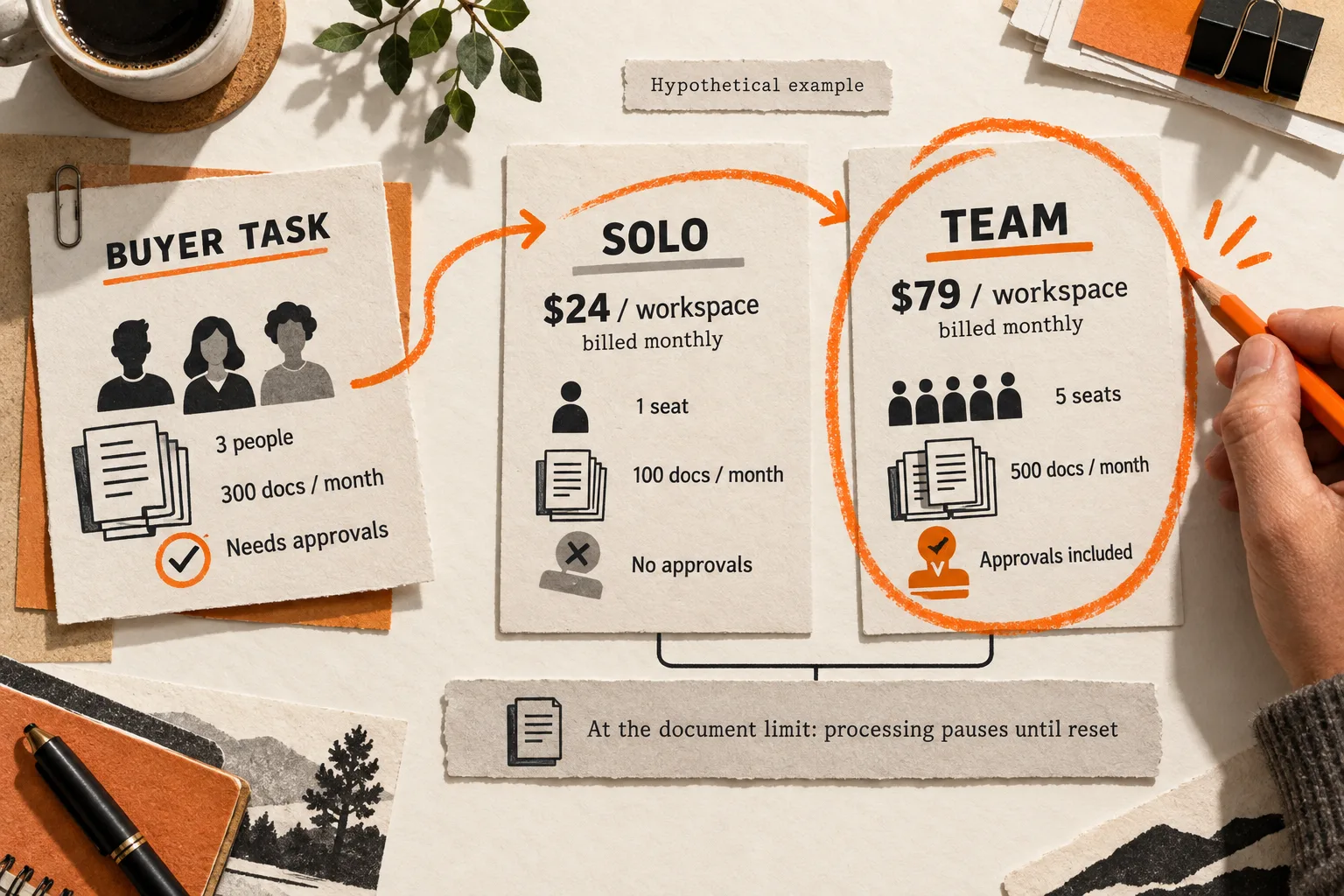
Suppose a two-person AI support startup has an existing walkthrough about reviewing generated replies. The founder allocates four hours to making additional versions and reviewing their results. Production starts this week, with some follow-up work reserved for later review dates. All audience observations, times, thresholds, and outcomes in this example are hypothetical.
The founder reserves 25 minutes for shared source review, link setup, and a final comparison. That leaves 215 minutes for individual formats, including their follow-up and measurement.
| Candidate | Additional time allowance | Audience rationale |
|---|---|---|
| Email lesson | 55 minutes | Existing readers asked about review steps |
| LinkedIn text post | 45 minutes | Relevant support leaders have joined earlier discussions |
| Narrated video | 105 minutes | The review action benefits from a visible demonstration; distribution still needs testing |
| Slide deck | 90 minutes | No distinct audience need identified yet |
The email, text post, and video require 205 minutes. Adding shared work brings the total to 230 minutes, leaving a ten-minute buffer. Including the deck would bring the batch to 320 minutes, beyond the four-hour limit.
The founder defers the deck because it lacks a distinct audience need and would exceed the budget. The video’s teaching purpose earns it a trial, but the founder still needs to identify where relevant support leaders will encounter it. If that distribution plan remains unclear, the 105 minutes can stay unspent.
Before production, the founder sets these continuation rules:
| Format | Review date | Condition for considering another version |
|---|---|---|
| Seven days after distribution | At least two qualified conversations, within 55 minutes of total work | |
| Text post | Seven days after distribution | At least one qualified conversation, within 45 minutes |
| Video | Thirty days after distribution | At least two qualified conversations, within 105 minutes |
These thresholds express this team’s priorities. They are not benchmarks. Each format gets its planned observation window, so the founder does not judge a new post against a video that has had a month to gather responses.
Suppose the email reaches its 55-minute limit with five minutes of work left. The founder explicitly assigns five minutes from the batch buffer, bringing the email’s actual time to 60 minutes and leaving five minutes in reserve.
If that email produces two qualified conversations, its format-specific effort is 60 ÷ 2 = 30 minutes per observed conversation. That figure excludes shared setup and cash costs; keep those in the batch assessment. The email meets the response threshold but exceeds its original allowance. Before repeating it, the founder must simplify the work to fit 55 minutes or set a new allowance and identify what it displaces. Two responses alone do not establish profitability or reliable future performance.
Set separate rules for stopping work and reviewing results
A production stop rule limits spending before the results arrive. When a format reaches its allowance, simplify it, defer it, or explicitly reallocate time from the buffer or another task. Preserve accuracy and accessibility; cut decorative work before cutting checks. Reserve follow-up and measurement time before using the whole allowance on production.
At the review date, choose an action: repeat, revise, or pause. Record the evidence and its limits separately.
Repeat when the result meets the chosen threshold within an acceptable budget and another test is worth the displaced work. Revise when you can name a plausible problem to test, such as an unclear opening or a broken destination link. Specify one change and a new cap. Pause when the result does not justify more work and you have no specific revision worth funding.
Use “insufficient evidence” to describe a result when too few relevant people encountered the asset to judge its message. You can record both “pause” and “insufficient evidence”: the decision limits further spending while leaving the explanation unresolved.
Check measurement quality before repeating a format. Mailchimp documents that automated activity can inflate email opens and clicks, and that its filtering identifies most bot activity rather than all of it. Pair engagement reports with substantive replies or downstream actions. Mailchimp’s explanation of bot activity
Short review windows can also miss the value of practice or a useful library that develops over time. If learning video production or building that library is the purpose, give it a separate, finite allowance and review date. Evaluate that work against its stated purpose.
Copy the worksheet and budget one version
Set the batch time limit, cash limit, and shared setup allowance first. Then complete one record per proposed format:
Source asset and exact section to reuse:
Audience and task:
Evidence of need, with source or observation:
Format, distribution destination, and next action:
Owner and work displaced:

Estimated minutes:
  Selection:
  Adaptation:
  Production:
  Quality review:
  Distribution:
  Follow-up:
  Measurement:
Total format allowance:
Shared setup recorded in batch budget:
Additional cash expense:
What to simplify or defer at the time limit:

Useful response definition:
Tracking method and how to record overlapping responses:
Review date and continuation threshold:

Actual minutes and cash spent:
Observed responses and evidence limits:
Decision: repeat / revise / pause
One proposed change and its next allowance:
Choose one existing asset and complete the record for its next proposed version. Put the production allowance and review date on the calendar before starting. If you cannot name an audience need or a credible distribution destination, use the next work session to investigate that gap.