You can write a SaaS customer case study without metrics by documenting a specific workflow, supporting it with customer testimony and records, and getting permission to publish. State what wasn’t measured beside the claim it limits.
Perhaps your customer can explain how they use the product, but nobody recorded completion times before adoption. Or the customer won’t share revenue data. A story about how the team introduced human review or changed a handoff can still help a buyer plan an implementation. Its usefulness depends on the detail you can establish.
Decide which story your evidence supports
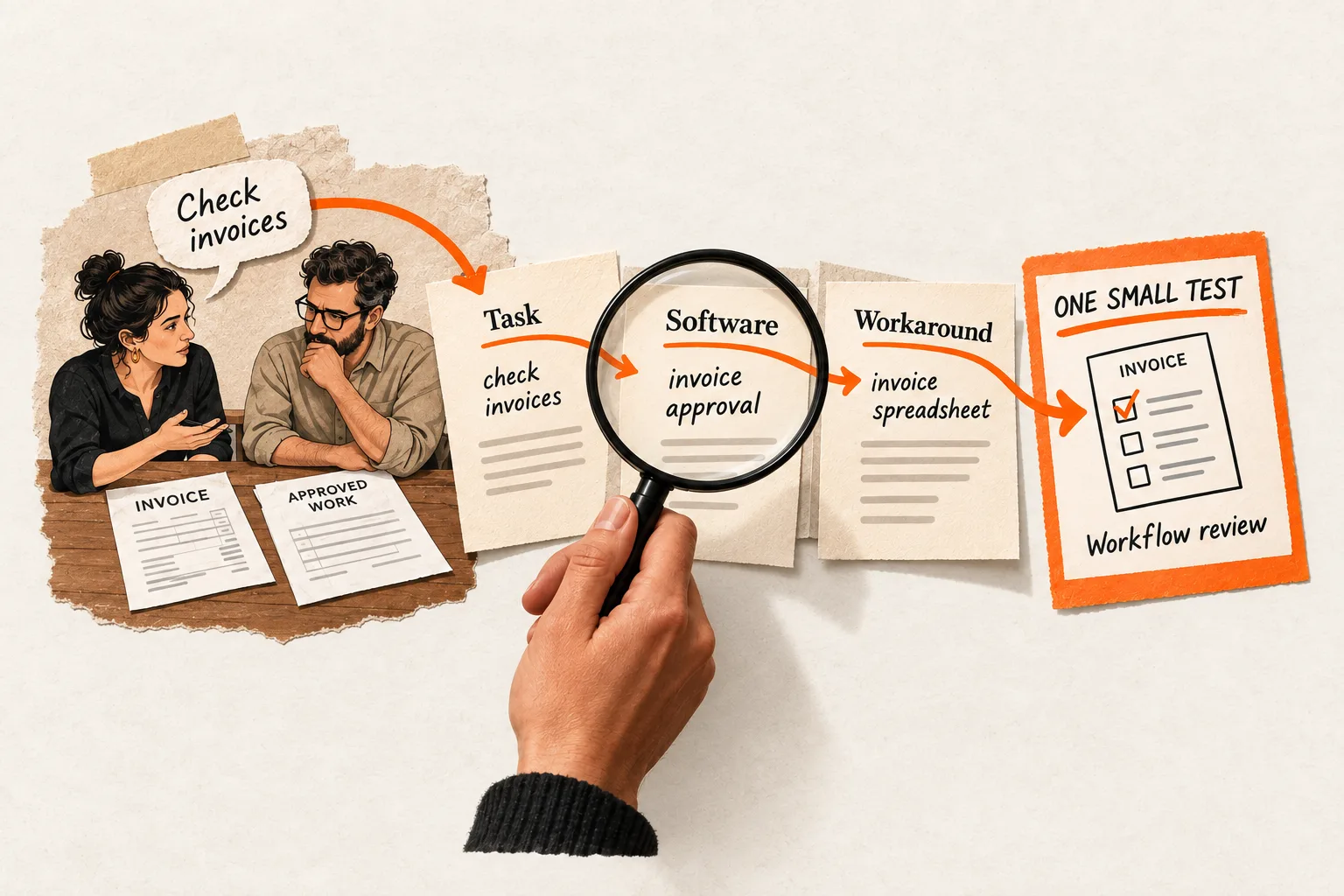
Start with one buyer question: What could this customer help someone understand?
A customer using an AI drafting tool might explain where staff check its output. A team using project management software might show how requests reach an assigned owner. Either story can answer an implementation question even when the team hasn’t measured productivity.
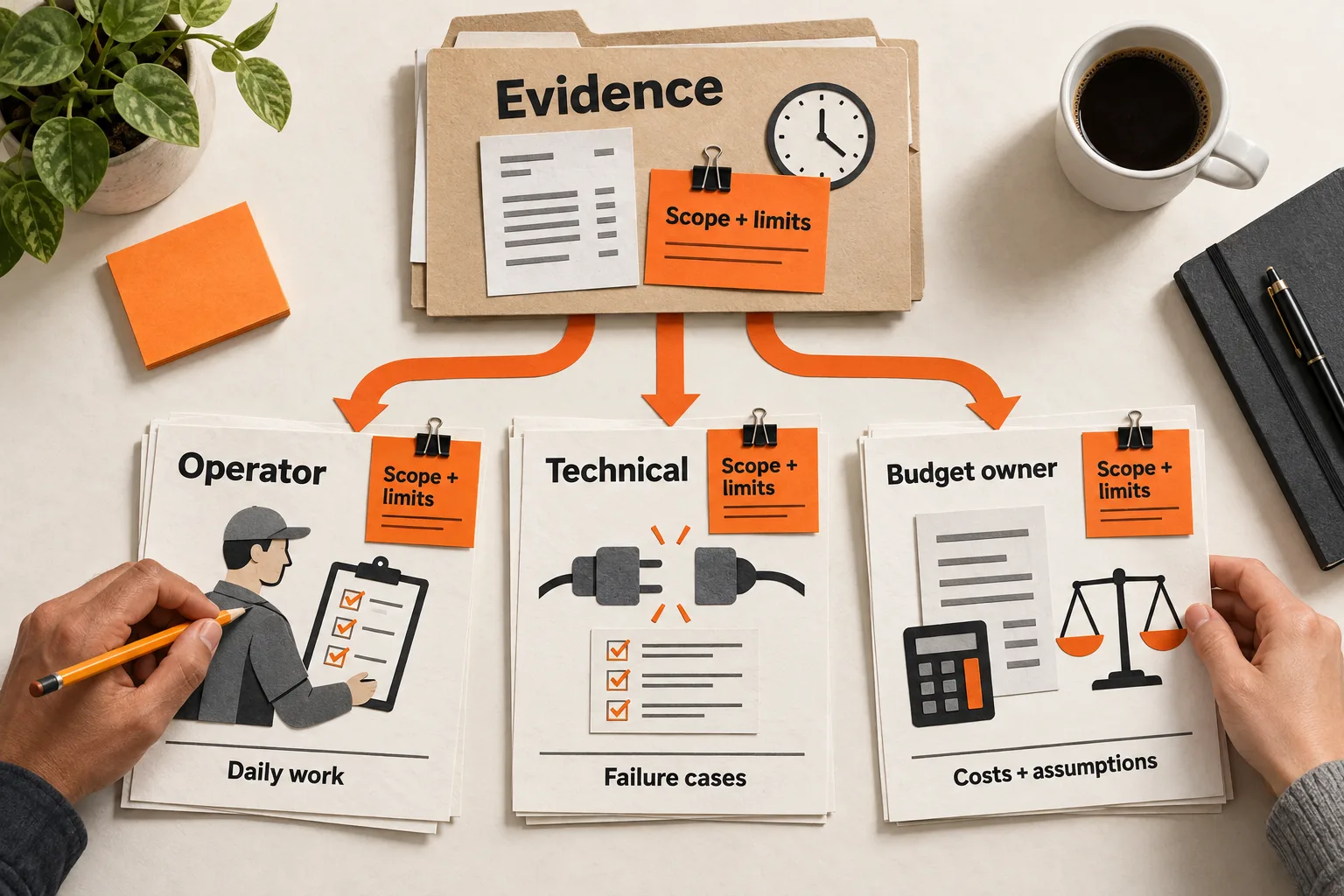
Write a provisional claim, then identify its evidence and its limit:
| Proposed claim | Evidence to look for | What it doesn’t establish |
|---|---|---|
| A request reached an assigned owner | A workflow record showing that handoff | Consistent assignment across all requests or faster resolution |
| A manager prefers the new review process | The manager’s interview or written response | Teamwide satisfaction |
| Staff reviewed AI drafts for the tasks described | Approved examples and workflow records | Accuracy or time savings across the team |
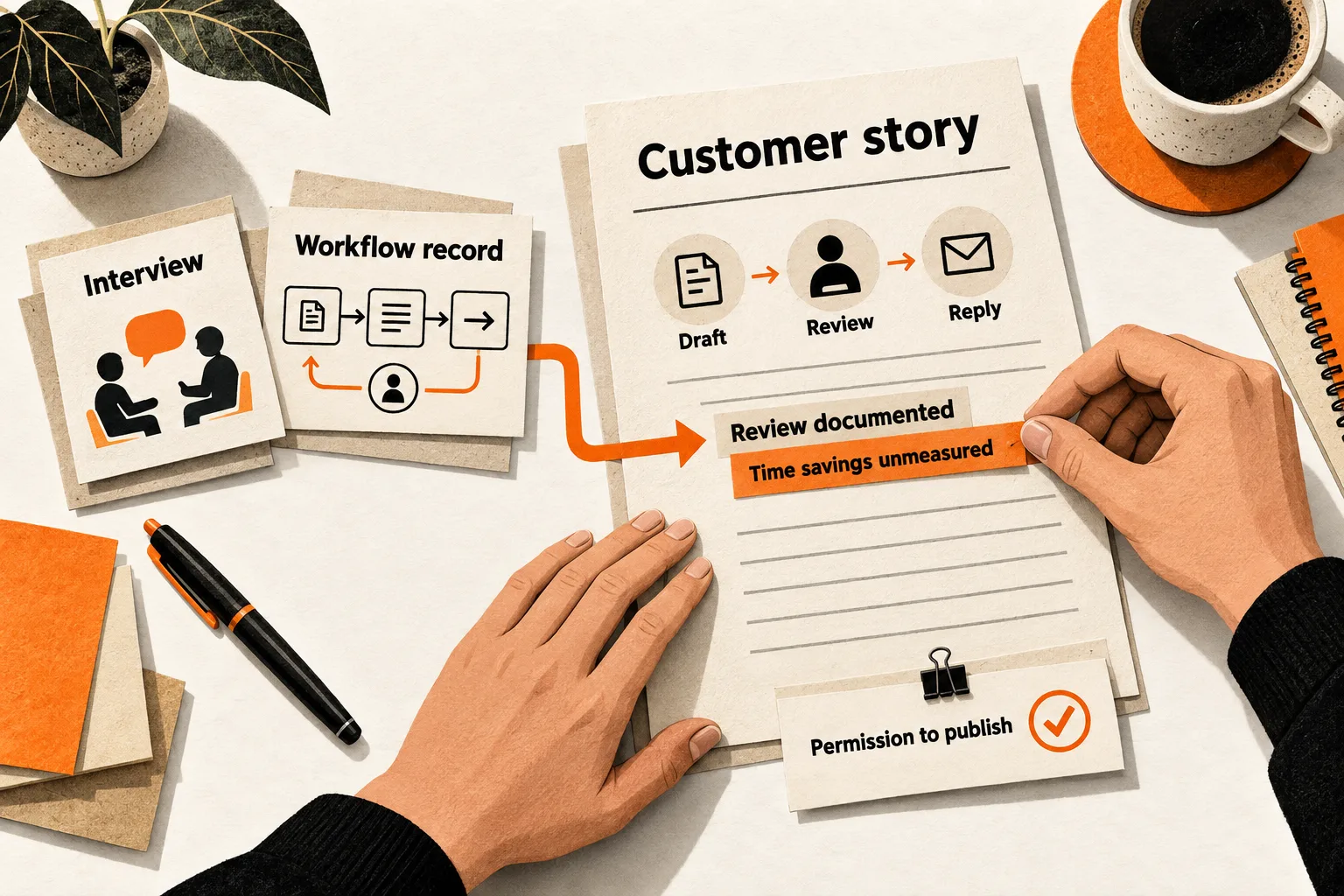
Keep observations, customer opinions, and your interpretations separate. An interview records what someone reported. A workflow record may establish that a particular action occurred. Neither alone establishes that your product caused a business improvement.
Words such as faster, fewer, and more accurate make comparative claims even without a percentage. If you cannot support the comparison, describe the process you can document.
General praise may support a testimonial with permission to publish. An imagined use case belongs in a labeled illustration. A customer case study needs a real account with enough evidence to explain what happened.
Find out why the metrics are missing
The gap determines what to investigate next:
| Situation | Next step |
|---|---|
| No baseline exists | Reconstruct the previous process from available records and attributed recollection. Don’t calculate precise savings from rough memories. |
| Data exists but is confidential | Ask whether the customer will approve a narrower factual statement. Avoid implying that undisclosed numbers prove an exceptional result. |
| Several things changed together | Identify changes in staffing, procedures, and product use. Describe the implementation without assigning the full outcome to the software. |
| Results are still being evaluated | Write an implementation story and name the outcome that remains unmeasured. |
A limitation sentence could read: “The team had not measured handling time before the rollout, so this account does not estimate time savings.”
If measurements exist and contradict the proposed story, include the facts that materially change its meaning. A narrower angle must not conceal disappointing results.
Interview for a specific incident
Choose someone who did the work or directly observed it. Ask them to walk through a recent task, including the awkward parts.
The UK Government Digital Service recommends open, neutral questions and concrete examples rather than general accounts of how work should happen. You can apply that interviewing method to customer stories. Read its interview guidance.
Use these prompts as a starting point:
- What triggered the task, and what happened next?
- How did you handle a similar task before adopting the product?
- Which steps changed, and which stayed manual?
- Can you show an example we may inspect?
- Where, if anywhere, did the product require correction or extra work?
- What else changed during the same period?
- What did you measure, and what is your personal assessment?
When someone describes convenience, ask for an example. When they describe an improvement, ask how they know. Leave room for the customer to say that something didn’t improve.
Supporting material might be a redacted checklist, a workflow diagram, or a support ticket showing a handoff. A checklist documents the intended process; a completed record or observed example helps establish what actually happened. Ask permission to inspect the material separately from permission to publish it. Retain only the supporting records you are authorized to keep.
If an interview isn’t possible, written answers and existing records may support a narrower story. Resolve important ambiguities with the customer before treating those materials as a complete account.
Agree on what may become public
Explain what you’re collecting, whether you’re recording, and how you intend to use the material. The Government Digital Service’s consent guidance recommends explaining how findings will be used and shared and keeping evidence of what the participant agreed to. It provides a research method, not a US marketing release template. Read the consent guidance.
For a customer story, separately confirm permission for the person’s name and role, company identity, quotations, and any screenshots or documents. Identify who can approve publication on the company’s behalf.
Send that approver the actual headline, narrative, captions, and proposed quotations. Keep the approved version with its permitted uses, including whether excerpts may appear in email or social posts. A headline or excerpt can overstate an otherwise careful account.
Preserve the meaning of customer statements. An observation about one task doesn’t establish praise for the whole product. If an edit changes the substance, ask the customer to confirm the revised wording. Never fill a missing quotation with generated text.
US FTC guidance says endorsements must reflect honest opinions or experiences and cannot convey claims the advertiser could not otherwise make. Unexpected connections that could affect how readers evaluate an endorsement need clear disclosure. If you offered a benefit for participating, assess whether it creates such a connection. Customer approval alone does not establish that a claim is supported. Read the FTC’s endorsement guidance.
For an anonymous story, retain the necessary permission and supporting records you are authorized to keep. Check whether the remaining details still identify the customer, and recognize that readers have less ability to assess an unnamed source.
Worked example: an AI support drafting pilot
This example is fictional. It illustrates how to write within the limits of the described evidence; it is not a customer result or testimonial.
Imagine a founder interviewing a support lead whose team piloted an AI drafting tool. The hypothetical evidence includes a walkthrough, a redacted routing checklist, and reviewed examples of drafts. There is no reliable baseline for handling time or evaluation of answer accuracy.
The headline “Support team resolves tickets faster with AI” would exceed that evidence. The story could instead describe how the pilot worked:
How a support team introduced AI drafts with human approval
The team tested AI drafts for routine account questions. According to the support lead, agents previously composed replies using help documentation and saved responses. In the pilot walkthrough, agents reviewed an AI draft before deciding what to send.
The routing checklist excluded billing disputes from the pilot. The walkthrough showed agents checking drafts against customer account details and current documentation. The reviewed examples included edits before sending, including removal of a suggested step that didn’t apply to the account.
These materials document the review process in the examples examined. The team did not establish a handling-time baseline or evaluate accuracy across the pilot, so the account cannot establish faster resolution or improved answer quality.
The draft gives a buyer concrete implementation questions: Which requests belong in a pilot? Who should approve replies? What should the team measure? It also preserves the sampling limit. Selected examples cannot establish how often drafts needed correction across the pilot.
Use this worksheet before drafting
Copy the fields below into a document and complete them for one customer and one buyer question.
| Field | What to record |
|---|---|
| Reader question | The decision the story should help a buyer make |
| Customer context | Role, workflow, and constraints approved for disclosure |
| Previous process | What happened before, distinguishing records from recollection |
| Product use | What the customer did, including setup and manual work |
| Supported change | One specific observation or clearly attributed assessment |
| Evidence | Source, date, relevant passage or record, and exactly what it establishes |
| Limits | Missing measurements, sample boundaries, other changes, and unresolved problems |
| Permission | Approved identities, quotations, supporting material, wording, and channels |
| Next measurement | A defined outcome, collection method, owner, and review date |
For the fictional support pilot, the reader question could be “Where should human review sit in our AI drafting workflow?” The evidence field would connect the description of review to the walkthrough and edited drafts. The limits field would record the missing time baseline, lack of an accuracy evaluation, and unknown representativeness of the examples.
Build the narrative in this order: customer context, previous process, product use, observed change, and limits. Place supporting evidence beside the sentence it supports. Put the measurement gap where a reader might otherwise infer an outcome.
Before publication, check that each comparison has support, each quotation preserves the approved meaning, and each document or screenshot is cleared for public use. Read the title by itself to check whether it promises more than the evidence establishes.
If you’re starting with an older customer story, use FindVex’s guide to refreshing a case study library without losing its evidence to assess what remains usable.
Next task: resolve one missing piece of evidence
Choose one customer and complete the worksheet through the limits field. Write a provisional headline and one paragraph answering the buyer’s question. Beside each unsupported sentence, name the exact record or customer answer you need.
Choose one of those gaps for your next follow-up. For example, ask for a completed ticket showing the handoff described in the interview, plus confirmation of what you may quote or reproduce. Revise the paragraph to match what you can establish before sending the full story for approval.