“AI-powered summaries” names a capability. “Save hours every week” promises a result. To connect them, describe the work your customer does: opening a transcript, finding decisions, checking names, and preparing a follow-up.
For SaaS feature-to-benefit copywriting, use this sequence: feature → changed workflow → customer benefit → supporting evidence. Start with one feature block. Explain which step your software changes, why that matters to the customer, and how you know the claim holds up.
Choose the customer and the task before writing the benefit
A searchable archive might help a support agent find an earlier answer, while a manager uses it to review how a recurring issue was handled. “Find information faster” leaves both situations vague.
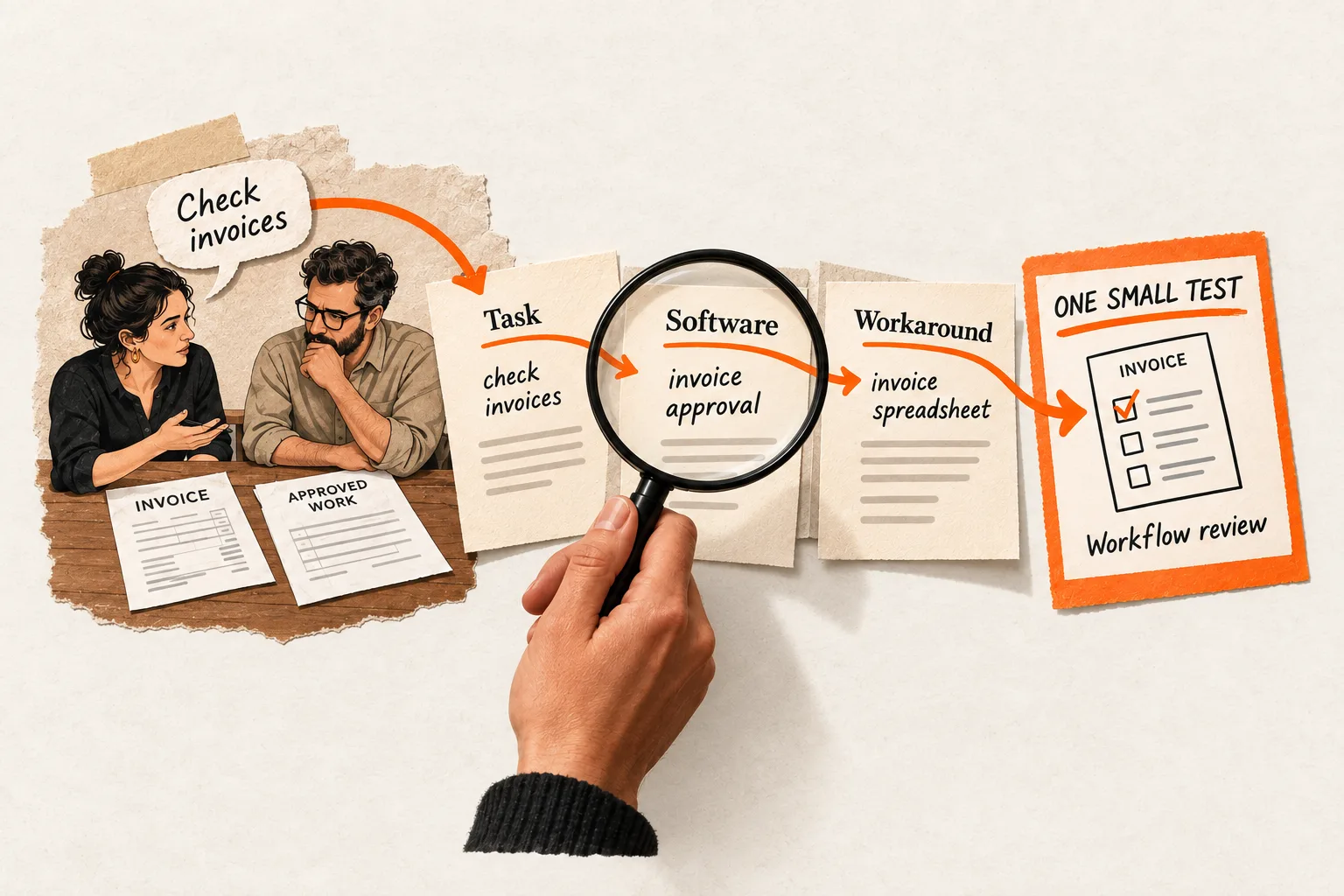
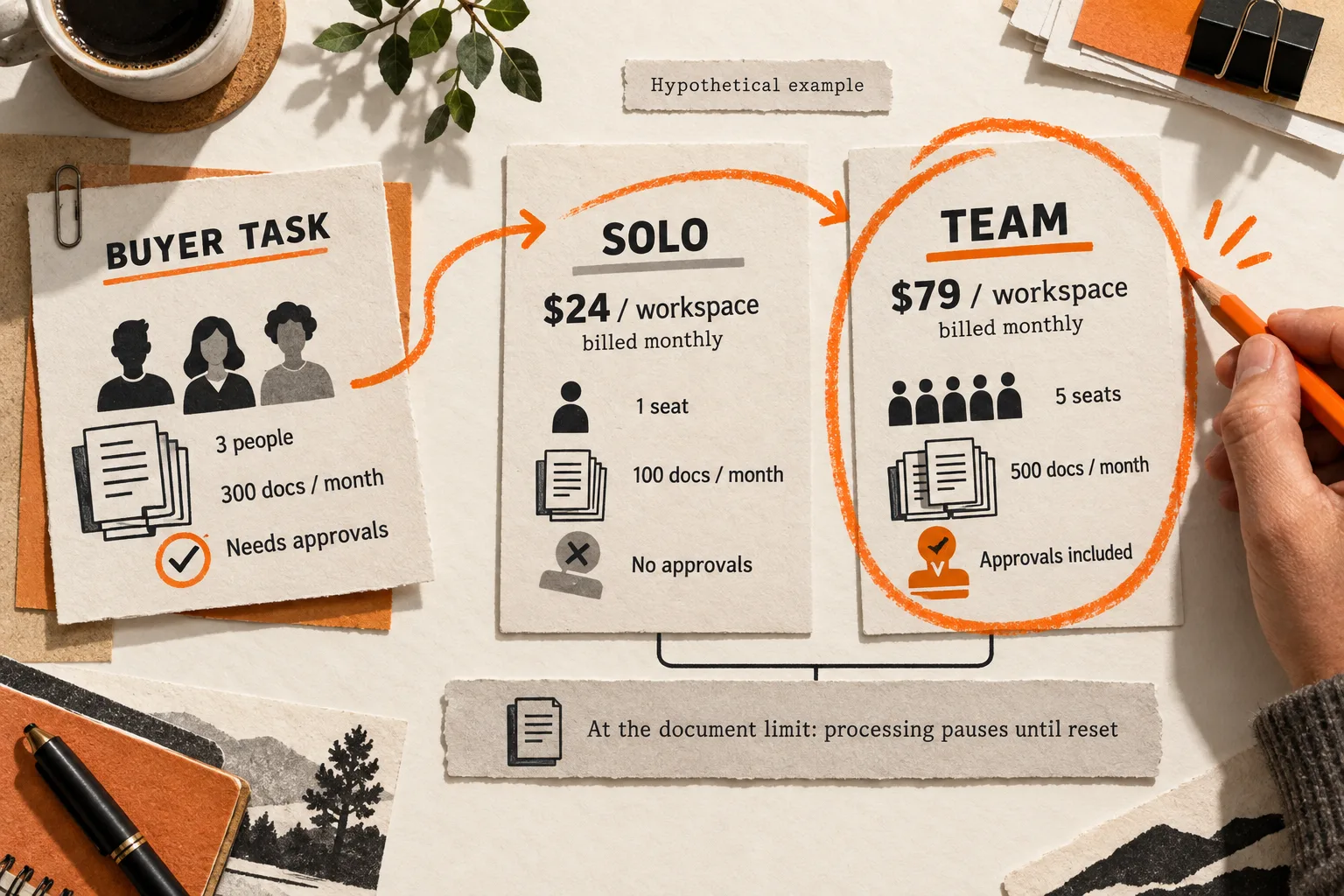
Choose one customer role, one recurring task, and the alternative they use today. That alternative might be another application, a spreadsheet, or a manual process. April Dunford’s positioning method starts with what customers would do without the product, then connects differentiated capabilities to value and the customers who care about it. Her positioning guide explains those dependencies.
Write the starting situation:
When [specific event happens], [customer role] uses [current method] to complete [task], but runs into [observable problem].
Treat each blank as a research question. If you do not know the current method, ask someone to walk through the last time they completed the task. Look for steps, handoffs, and checks. “Our process is inefficient” gives you less to work with than someone describing how they copy the same account details into two systems.
Keep the customer’s original language separate from your interpretation. Joanna Wiebe’s review-mining method starts with the audience, the outcome they seek, and the solutions they already use. Use reviews to find messages worth investigating. A vivid complaint does not establish how widespread a problem is among your buyers.
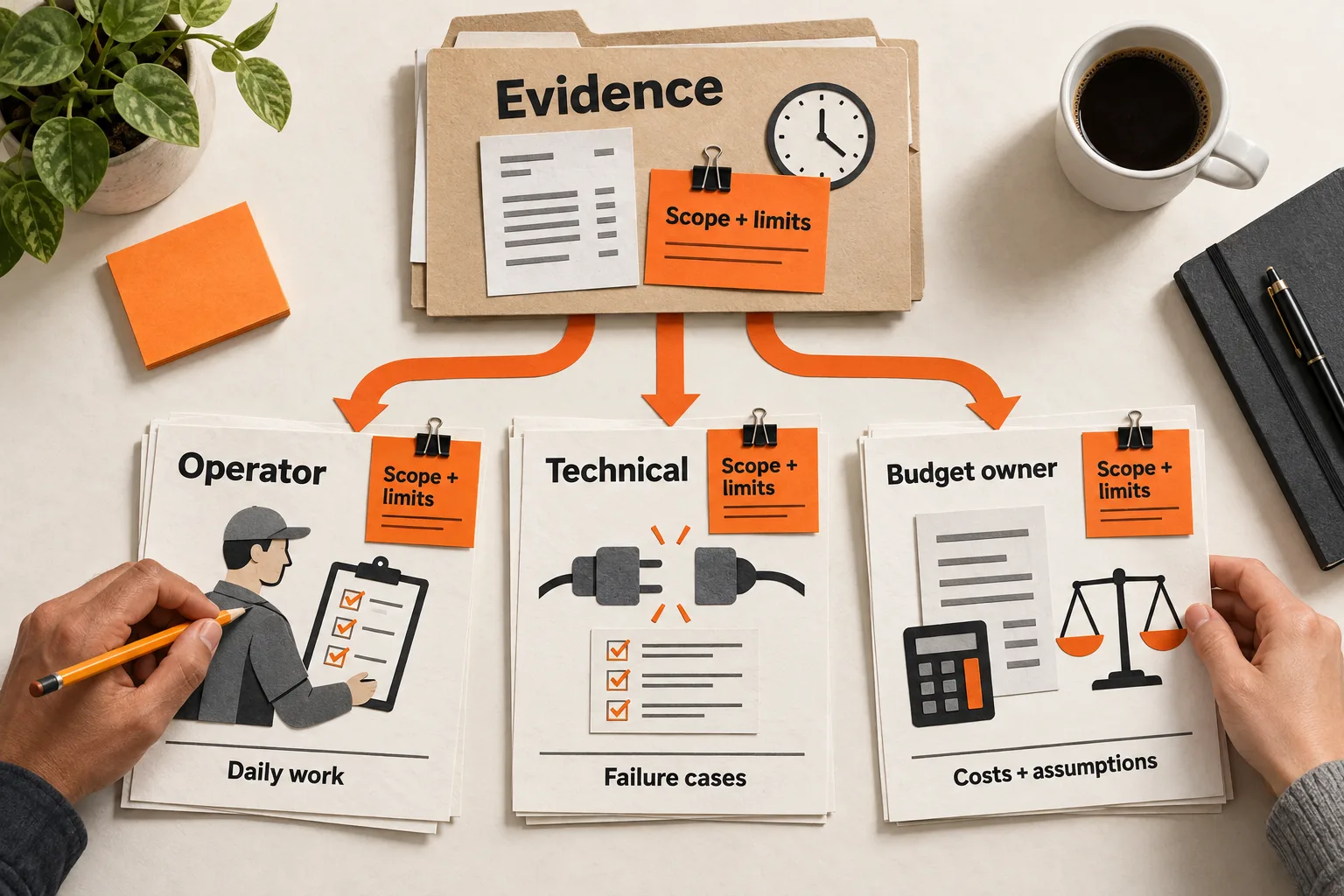
Use the FindVex guide to building a pain-point evidence sheet to organize those observations. Bring a specific task and its supporting observations into the worksheet below.
Add the workflow between the feature and the benefit
Start with a literal description of what the product does. Leave out adjectives such as “seamless” and “powerful.” Then name the step that changes for the user.
For example, a hypothetical application lets users save a report’s filters. The changed workflow is reopening that saved view for the next review. The immediate benefit is preparing the same report without rebuilding its filters each time.
A claim about better business decisions would require more evidence: the saved view would need to contain useful information, someone would need to interpret it correctly, and a decision would need to improve.
Ask what the feature lets the user do, which step it changes, and why that change matters to this customer. You may be able to demonstrate that a feature removes repeated data entry without knowing how much time a team saves overall.
Keep the feature in the finished copy when it helps explain the benefit. A technical buyer may need the integration name, export format, or permission setting to determine whether the promised workflow is possible.
Match the claim to the evidence you have
Before polishing a sentence, write down what would make it true. Use this table to identify what to investigate; the entries are starting points for a copy review.
| Proposed claim | Evidence to check |
|---|---|
| “Export the report as a CSV” | The current product performs that export under the conditions described. |
| “Reuse your filters each week” | The saved settings persist and work in the stated workflow. |
| “Prepare reports in half the time” | Relevant task measurements support the stated comparison, including setup and review. |
| “Increase revenue” | Evidence supports a causal connection between product use and the claimed business result under stated conditions. |
A product demonstration can support a capability claim. It cannot, by itself, establish a typical customer’s time savings or revenue gain.
The FTC’s advertising guidance for small businesses says advertisers need objective evidence supporting their claims before an ad runs. The evidence required depends on the claim. The FTC also considers implied claims and the message conveyed by the ad as a whole.
For your copy review, give each proposed benefit one of these statuses:
- Ready: Evidence supports the wording and the outcome a reader would reasonably infer.
- Conditional: Evidence supports the claim under a specific condition, but the copy still needs to state it. For example, an administrator must enable the integration first.
- Unsupported: Evidence is missing or does not support the claim. Investigate further or narrow the wording.
A conditional claim still needs evidence. Adding “can” or “helps” cannot fill that gap: “helps you double revenue” still suggests a result that needs support.
Worked hypothetical example: an AI meeting-summary tool
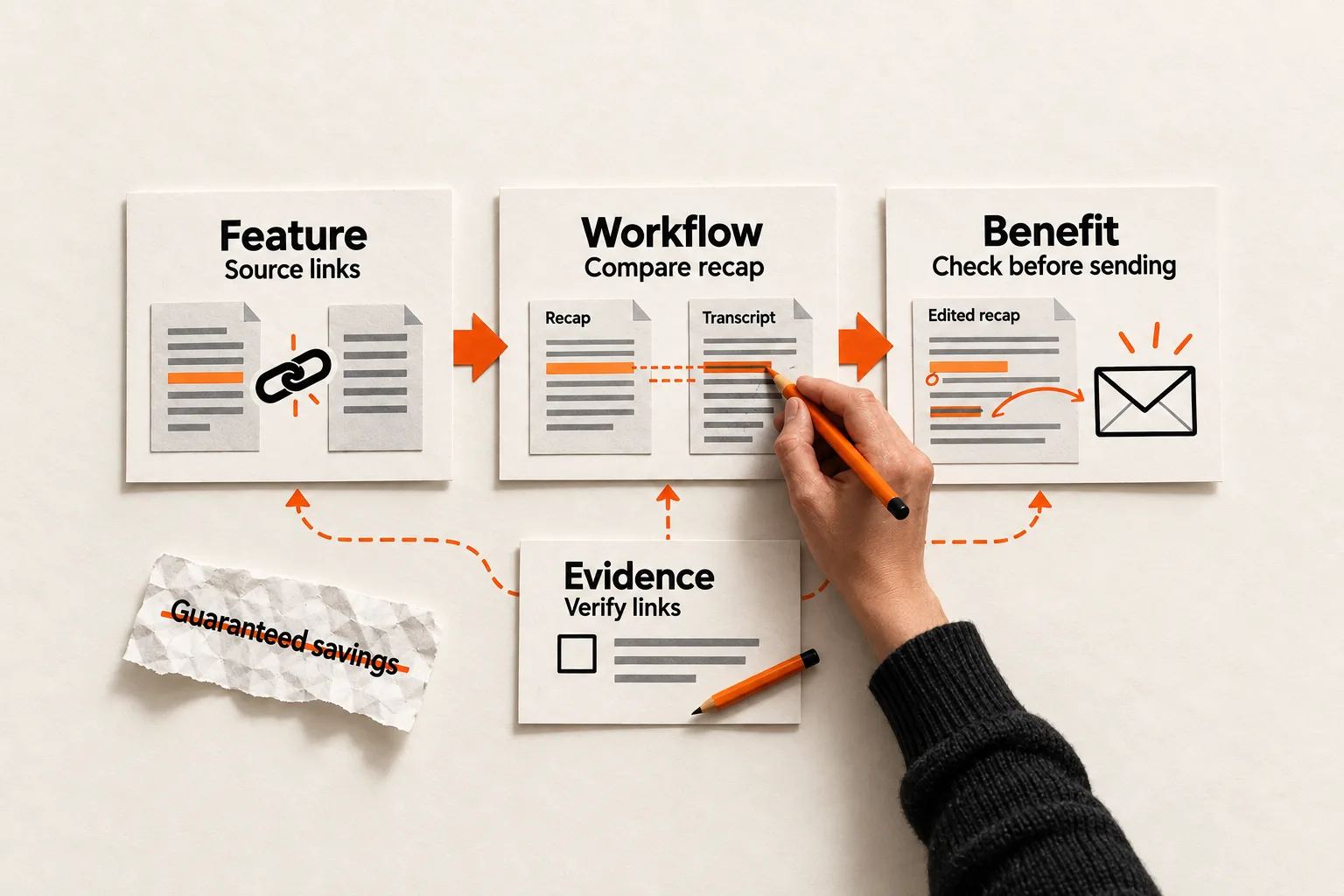
Suppose a fictional SaaS product accepts uploaded meeting transcripts, drafts a summary, and links each summary item to a passage in the transcript. Users review the draft before exporting it. These capabilities are assumptions for the example.
The intended user is a customer success manager preparing a follow-up after an account call. Their current method is to read the transcript, collect decisions and next steps, then write the recap.
An initial feature block might read:
AI-powered meeting intelligence. Save five hours a week and never miss a commitment.
Neither promise follows from the assumed capabilities. There are no timing results, and source links do not establish that the summary captures every commitment.
Here is how the feature fits into the worksheet:
| Field | Hypothetical entry |
|---|---|
| Feature | Each drafted summary item links to a source passage. |
| Changed workflow | The manager opens that passage while checking the draft. |
| Immediate benefit | The manager can compare a summary item with the conversation before sending the recap. |
| Evidence needed | Check that the links open the corresponding passages and are available during review. |
| Remaining work | The manager must check accuracy and read the transcript for omitted decisions or commitments. |
| Claim status | Unsupported until the actual product behavior is verified. |
A candidate feature block could say:
Check your call recap against the transcript.
Open the source passage linked to each AI-drafted summary item as you review decisions and next steps. Read the transcript for omitted commitments and correct errors before exporting your follow-up.
The copy describes a task the reader can picture and makes the review responsibility visible. A source link gives the user somewhere to check; its presence alone does not prove that the summary item is accurate. Verify the described behavior in the actual product before using this copy.
If the team later wants to claim faster preparation, it could compare similar recap tasks with and without the tool. Record transcript length, setup, corrections, total completion time, and output quality. Use those observations to assess what claim, if any, they support. Timing only the generation step leaves out much of the work the headline promises to improve.
Copy this feature-to-benefit worksheet
Complete one record for each feature you want to explain. Use “unknown” when an answer needs research.
Customer role:
Situation that triggers the task:
Current method or alternative:
Observed problem and source:

Feature available today:
Step the feature changes:
Immediate benefit to this customer:
Evidence supporting that benefit, with source and date:
Conditions, exclusions, or remaining work:

Proposed headline:
Supporting sentence explaining how it works:
What a reader might infer beyond those words:
Claim status: ready / conditional / unsupported
Next verification task:
Keep the evidence field concrete. “Engineering confirmed it” is difficult to revisit. Record the tested behavior, date, and conditions so a teammate can check the same claim. For measured results, retain the method, sample, comparison, and limitations alongside the number.
When several features produce the same benefit, consider grouping them under one explanation. When one feature serves several audiences, choose the workflow relevant to that page. Trying to fit every possible benefit into one sentence can leave the reader unsure whether any apply.
Check understanding before judging performance
Show the revised block to people who perform the task. Ask what the product would let them do, what they would still need to do themselves, and what they would expect after using it. Let them answer before explaining the copy.
If they infer a guarantee you cannot support, revise the wording. If they understand the capability but do not care about it, revisit the chosen workflow or audience. Clear wording cannot establish that a benefit matters.
For your product page, define the next useful action, such as a qualified demo request or a trial user completing the workflow. Record which copy version visitors saw and follow what happens after the click. More button clicks alone do not show whether visitors made useful progress.
Wiebe’s guide to measuring copy recommends giving each element a job while checking how the whole path works together. A drop-off identifies somewhere to investigate; it does not prove that the copy at that point caused the problem.
With limited traffic, use comprehension feedback to find misunderstandings and keep performance conclusions modest. A few favorable reactions do not establish a conversion lift.
Review one feature block today
Choose a block that names a capability without explaining its use. Complete the worksheet, then draft a headline and supporting sentence. Check that a reader can identify the task, understand the step the product changes, and see any dependencies or remaining work.
For each stated or implied outcome, point to the evidence that supports it. Replace unsupported numbers, guarantees, or broader promises with the nearest useful claim you can substantiate. Check that the page’s next action lets the reader investigate or try that workflow.
Finish with one revised block and a verification task for any unresolved claim. Keep stronger promises in your research backlog with the specific evidence needed to reconsider them.