How to Build Backlinks for Small Business Websites (2026 Guide)
Learn how to build backlinks for your small business website. Free and low-cost strategies that actually work in 2026.
What Are Backlinks and Why Do They Matter?
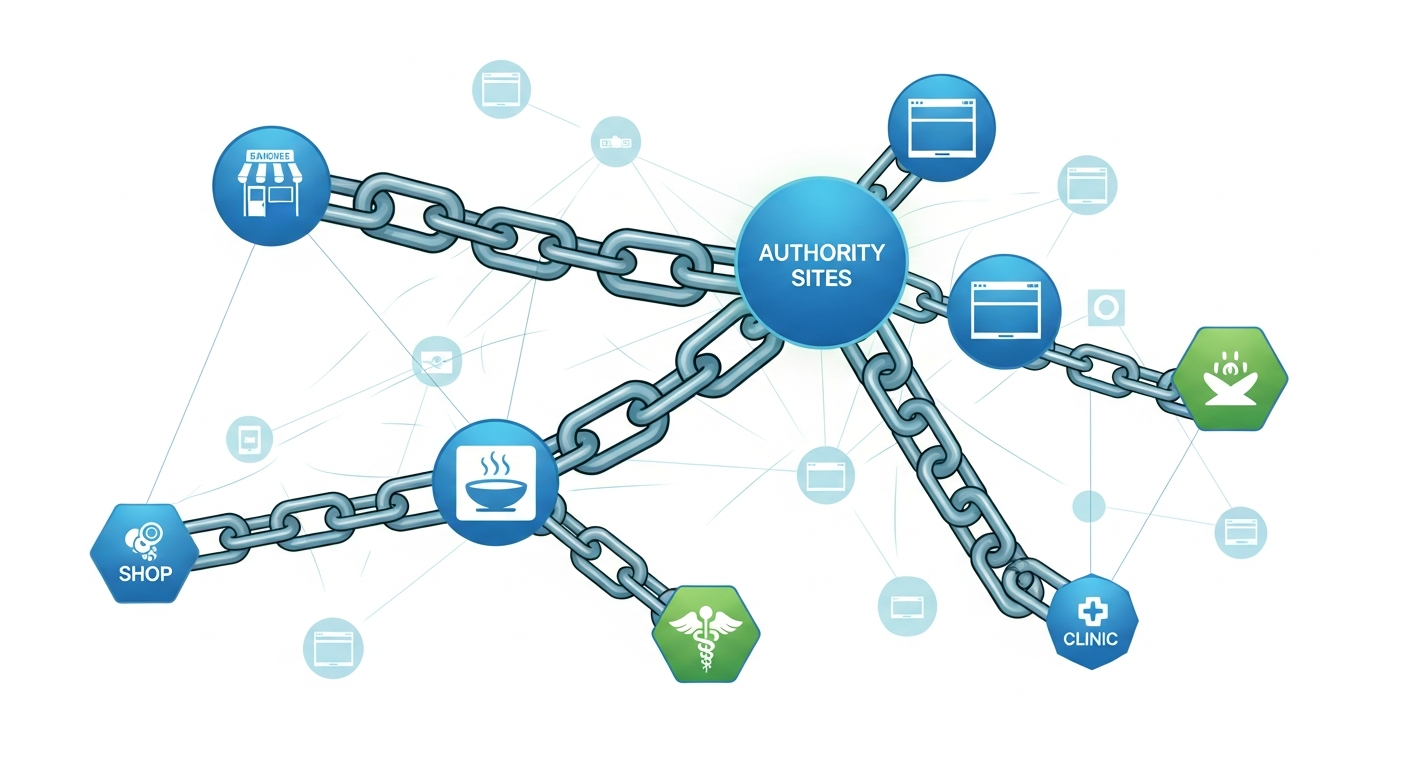
Backlinks are links from other websites that point to your website. Think of them as votes of confidence from other sites – when a reputable website links to yours, it's essentially telling search engines that your content is valuable and trustworthy.
Why Backlinks Are Crucial for Small Businesses
1. Improved Search Rankings: Google's algorithm considers backlinks one of the top three ranking factors. Quality backlinks can significantly boost your position in search results.
2. Increased Domain Authority: Each quality backlink contributes to your website's overall authority, making it easier to rank for competitive keywords.
3. Direct Traffic: Backlinks don't just help with SEO – they also drive referral traffic from the linking websites.
4. Brand Credibility: Being mentioned on reputable websites enhances your business's credibility and trustworthiness.
5. Competitive Advantage: Most small businesses neglect link building, giving you an opportunity to outrank competitors who focus solely on on-page SEO.
“AI agents do in hours what teams used to do in weeks. The advantage compounds.”
Quality vs. Quantity in 2026
Google's algorithms have become increasingly sophisticated at identifying high-quality backlinks. A single link from a relevant, authoritative website is worth more than dozens of low-quality links. Focus on:
- Relevance: Links from websites in your industry or local area
- Authority: Links from established, trustworthy websites
- Context: Links that appear naturally within relevant content
- Diversity: Links from various types of websites and sources
10 Free Backlink Strategies for Small Businesses
1. Create Link-Worthy Resource Content
The Strategy: Develop comprehensive, valuable content that other websites naturally want to link to.
Actionable Steps:
1. Research common questions in your industry using tools like AnswerThePublic (free)
2. Create detailed guides, tutorials, or resource lists
3. Include original data, statistics, or case studies
4. Format content with clear headings, bullet points, and visuals
5. Promote the content on social media and to industry contacts
Example: A local plumber could create "The Complete Homeowner's Guide to Preventing Winter Pipe Damage" with original photos and local weather data.
2. Leverage Local Business Directories
The Strategy: Submit your business to relevant local and industry directories for easy backlinks.
Actionable Steps:
1. Start with major directories: Google My Business, Yelp, BBB
2. Find industry-specific directories using Google searches like "your industry + directory"
3. Check competitors' backlinks using free tools like Ubersuggest (limited free version)
4. Ensure NAP (Name, Address, Phone) consistency across all listings
5. Write compelling business descriptions with relevant keywords
Pro Tip: Focus on directories with high domain authority and real user engagement, not just link farms.
3. Build Relationships with Local Media
The Strategy: Become a go-to source for local journalists and bloggers in your area.
Actionable Steps:
1. Create a media kit with your bio, high-res photos, and expertise areas
2. Follow local journalists and bloggers on Twitter and LinkedIn
3. Offer expert commentary on industry trends or local issues
4. Send personalized pitches for story ideas (not press releases)
5. Respond quickly when journalists seek sources on platforms like HARO (Help a Reporter Out)
HARO Tips:
- Sign up for the free version at helpareporter.com
- Respond within 2 hours of queries being sent
- Provide specific, actionable insights, not sales pitches
- Include your credentials and contact information
4. Guest Posting on Industry Blogs
The Strategy: Write valuable content for other websites in exchange for backlinks.
Actionable Steps:
1. Identify potential websites using Google searches like "your industry + write for us"
2. Study their content style and audience
3. Pitch 3-4 specific article ideas that provide value to their readers
4. Write high-quality content that exceeds their usual standards
5. Include a natural link back to relevant content on your site
Email Template:
```
Subject: Guest Post Idea: [Specific Topic Relevant to Their Audience]
Hi [Name],
I've been following [Website] and love your recent post on [specific post].
I'm [Your Title] at [Company] and would like to contribute a guest post. Here are three ideas that would provide value to your readers:
1. [Specific headline with brief description]
2. [Specific headline with brief description]
3. [Specific headline with brief description]
I've previously been featured on [mention any credible publications]. Would any of these topics interest your audience?
Best regards,
[Your name]
```
5. Utilize Broken Link Building
The Strategy: Find broken links on relevant websites and suggest your content as a replacement.
Actionable Steps:
1. Find relevant websites using Google: "your industry + resources" or "your industry + links"
2. Use the free version of Check My Links Chrome extension to identify broken links
3. Create content that matches or improves upon the broken link's topic
4. Reach out to the website owner with a helpful email
Email Template:
```
Subject: Broken link on your [Page Title] page
Hi [Name],
I was reading your excellent article "[Article Title]" and noticed that one of your links appears to be broken:
[URL of broken link]
I have a similar resource that your readers might find valuable as a replacement: [Your URL]
[Brief description of why your content is helpful]
Hope this helps!
Best,
[Your name]
```
6. Participate in Industry Forums and Communities
The Strategy: Become an active, helpful member of online communities where your target audience gathers.
Actionable Steps:
1. Identify relevant forums, Reddit communities, and Facebook groups
2. Read community rules about self-promotion
3. Provide genuine value through answers and insights
4. Build relationships before ever sharing your own content
5. Share links only when they genuinely answer someone's question
Best Platforms:
- Reddit (find subreddits related to your industry)
- Quora (answer questions in your expertise area)
- Industry-specific forums
- LinkedIn groups
- Facebook communities
7. Create and Distribute Infographics
The Strategy: Design shareable visual content that other websites will want to embed.
Actionable Steps:
1. Research trending topics in your industry
2. Gather interesting statistics and data points
3. Use free design tools like Canva or Piktochart
4. Include your website URL and logo on the infographic
5. Provide an embed code for easy sharing
6. Reach out to relevant websites offering the infographic for their audience
Distribution Strategy:
- Submit to infographic directories (Visual.ly, Infographic Journal)
- Share on social media with relevant hashtags
- Email to industry contacts and influencers
- Include in your guest post pitches
8. Partner with Complementary Businesses
The Strategy: Form mutually beneficial relationships with non-competing businesses that serve your target audience.
Actionable Steps:
1. Identify businesses that complement yours (not competitors)
2. Propose cross-promotion opportunities
3. Write testimonials for each other
4. Create joint content or resources
5. Link to each other's helpful resources naturally
Example Partnerships:
- Wedding photographer + wedding planner + caterer
- HVAC company + home security company + landscaper
- Accountant + business lawyer + marketing consultant
9. Claim and Optimize Brand Mentions
The Strategy: Find existing mentions of your business and request links when appropriate.
Actionable Steps:
1. Set up Google Alerts for your business name and variations
2. Use free tools like Mention.com (limited free version) to monitor mentions
3. When you find unlinked mentions, politely request a link
4. Thank the website for the mention and provide your website URL
5. Offer additional information or quotes for future articles
Outreach Email:
```
Subject: Thank you for mentioning [Your Business]
Hi [Name],
Thank you for mentioning [Your Business] in your recent article "[Article Title]." We appreciate the recognition!
I noticed the mention doesn't include a link to our website. Would you consider linking to [Your URL] to help your readers learn more about our services?
We'd also be happy to serve as a resource for future articles on [relevant topics].
Best regards,
[Your name]
```
10. Sponsor Local Events and Charities
The Strategy: Support community organizations that will naturally link back to your website.
Actionable Steps:
1. Research local nonprofits, events, and community organizations
2. Offer sponsorship or volunteer services
3. Ensure sponsorship packages include website links
4. Participate actively, not just financially
5. Document your involvement for future marketing
Types of Opportunities:
- Local charity events
- Youth sports teams
- Community festivals
- Chamber of Commerce events
- Industry conferences and meetups
5 Low-Cost Backlink Strategies (Under $100)
1. Paid Directory Submissions ($20-50)
While most directory submissions should be free, some high-authority, niche directories charge modest fees that can be worthwhile.
Best Practices:
- Research directory authority using tools like Findvex
- Ensure the directory is relevant to your industry
- Read reviews from other businesses
- Avoid directories that guarantee immediate results
2. Professional Association Memberships ($50-100)
Many industry associations offer member directories with backlinks.
Selection Criteria:
- Choose associations relevant to your industry
- Verify they provide website links in member listings
- Consider the networking benefits beyond just backlinks
- Look for local chapters of national organizations
3. Premium HARO Subscription ($19/month)
The premium version of Help a Reporter Out provides earlier access to queries and better organization tools.
Benefits:
- Receive queries before free users
- Better search and filtering options
- Higher response rates due to less competition
4. Content Creation Tools ($10-30/month)
Invest in tools that help you create better link-worthy content.
Recommended Tools:
- Canva Pro for professional graphics
- Grammarly for polished writing
- BuzzSumo (limited paid plan) for content research
- Answer The Public for topic ideas
5. Outreach Management Tools ($25-50/month)
Tools to help manage and track your link building outreach efforts.
Options:
- Mailshake or similar email outreach tools
- Simple CRM systems to track relationships
- Social media management tools for relationship building
Backlink Strategies to Avoid (Toxic Links)
Understanding what NOT to do is just as important as knowing effective strategies. These practices can result in Google penalties that devastate your search rankings.
Red Flag Strategies
1. Buying Links from Link Farms
2. Reciprocal Link Schemes
3. Article Spinning and Content Farms
4. Comment Spam
5. Private Blog Networks (PBNs)
- Websites that exist solely to sell links
- Networks of low-quality sites with irrelevant content
- Guaranteed "1000 backlinks for $50" offers
- Excessive "I'll link to you if you link to me" arrangements
- Three-way link exchanges designed to manipulate rankings
- Footer link exchanges with unrelated websites
- Submitting the same article to hundreds of low-quality sites
- Using software to create multiple versions of the same content
- Publishing on sites with duplicate or plagiarized content
- Leaving generic comments with keyword-stuffed anchor text
- Using automated tools to post comments
- Commenting solely for the purpose of link building
- Networks of websites created specifically for link building
- Expired domains repurposed solely for SEO manipulation
- Hidden ownership connections between linking sites
Warning Signs of Toxic Link Opportunities
- Promises of immediate results
- Extremely low prices for large quantities of links
- Websites with no real content or audience
- Links from completely unrelated industries
- Requests for exact-match anchor text
- Websites with suspicious traffic patterns
How Google Identifies Bad Links
Google's algorithms look for:
- Unnatural link velocity (too many links acquired too quickly)
- Irrelevant link sources
- Over-optimization of anchor text
- Links from penalized websites
- Patterns indicating manipulation
Recovery from Link Penalties
If you suspect your website has been penalized:
1. Audit your backlink profile using tools like Findvex
2. Identify potentially harmful links
3. Attempt to remove bad links by contacting website owners
4. Use Google's Disavow Tool for links you can't remove
5. Submit a reconsideration request if necessary
How to Check Your Current Backlinks
Regularly monitoring your backlink profile is essential for understanding your progress and identifying potential issues.
Free Backlink Analysis Tools
1. Google Search Console
2. Ahrefs Backlink Checker (Limited Free Version)
3. Moz Link Explorer (Limited Free Searches)
4. Ubersuggest Backlink Analysis
- Provides data directly from Google
- Shows your most important backlinks
- Identifies linking domains and pages
- Access: Free with Google account
- Shows top backlinks and referring domains
- Provides basic anchor text analysis
- Limited to 100 backlinks per search
- Domain authority metrics
- Spam score indicators
- Link opportunities
- Basic backlink data
- Competitor backlink insights
- Limited free searches per day
Key Metrics to Track
1. Total Referring Domains
2. Domain Authority/Rating
3. Anchor Text Distribution
4. Link Growth Rate
5. Toxic Link Percentage
- Number of unique websites linking to you
- More important than total backlink count
- Track monthly growth
- Overall authority score of linking websites
- Quality indicator for your backlink profile
- Compare to competitors
- Words used in links pointing to your site
- Should be natural and varied
- Avoid over-optimization
- How quickly you're acquiring new links
- Should be steady and sustainable
- Sudden spikes can indicate problems
- Links from low-quality or spammy sources
- Should be minimal (under 5%)
- Monitor for sudden increases
Monthly Backlink Analysis Routine
1. Export backlink data from Google Search Console
2. Compare current month to previous month
3. Identify new linking domains
4. Check quality of new backlinks
5. Note any suspicious or low-quality links
6. Update your link building strategy based on findings
Backlink Building Timeline
Building a strong backlink profile takes time and consistency. Here's a realistic timeline for small businesses:
Month 1-2: Foundation Building
Expected Results: 5-10 new backlinks from directories and easy wins
- Set up Google Search Console
- Analyze current backlink profile
- Claim and optimize business directories
- Create initial link-worthy content
- Set up HARO and monitoring tools
Month 3-4: Content and Outreach
Expected Results: 10-20 new backlinks, including some higher-authority links
- Publish 2-3 high-quality resource pieces
- Begin guest posting outreach
- Start broken link building
- Engage in industry communities
- Build relationships with local media
Month 5-6: Scaling and Optimization
Expected Results: 20-30 new backlinks, improved domain authority
- Increase content production
- Expand guest posting efforts
- Develop partnership opportunities
- Launch infographic campaigns
- Optimize successful strategies
Month 7-12: Advanced Strategies
Expected Results: 30-50+ new backlinks monthly, significant ranking improvements
- Focus on high-authority targets
- Develop thought leadership content
- Speak at events and conferences
- Create linkable asset campaigns
- Build industry relationships
Realistic Expectations by Business Size
Solo/Micro Business (1-2 people):
Small Business (3-10 people):
Growing Business (10+ people):
- 10-20 quality backlinks per month
- Focus on local and niche directories
- 2-3 hours per week on link building
- 20-40 quality backlinks per month
- Mix of local and industry-wide strategies
- 5-8 hours per week dedicated to link building
- 40+ quality backlinks per month
- Comprehensive content marketing approach
- Dedicated marketing team member
Seasonal Considerations
Q1 (January-March):
Q2 (April-June):
-
---
Ready to improve your search rankings? Get a free SEO audit at findvex.com/audit — no obligation, results in 48 hours.
- New Year resolutions content
- Industry trend predictions
- Annual report data
Frequently Asked Questions
How many backlinks do I need to rank?
Quality matters more than quantity. 10 high-quality backlinks often outperform 100 low-quality ones.
Can I buy backlinks safely?
Buying backlinks violates Google's guidelines and can result in penalties. Focus on earning links naturally.
How long do backlinks take to work?
Backlinks typically start affecting rankings within 2-4 weeks, with full impact visible in 2-3 months.
What is a good backlink?
A good backlink comes from a relevant, authoritative website in your industry or location.
Do social media links count?
Social links are "nofollow" and don't directly boost rankings, but they drive traffic and visibility.
Should I hire someone for link building?
If you have the budget, yes. Professional link builders have established relationships and proven strategies.
FAQs
Ready to improve your search rankings? Get a free SEO audit at [findvex.com/audit](https://findvex.com/audit) — no obligation, results in 48 hours.
How many backlinks do I need to rank?
Quality matters more than quantity. 10 high-quality backlinks often outperform 100 low-quality ones.
Can I buy backlinks safely?
Buying backlinks violates Google's guidelines and can result in penalties. Focus on earning links naturally.
How long do backlinks take to work?
Backlinks typically start affecting rankings within 2-4 weeks, with full impact visible in 2-3 months.
What is a good backlink?
A good backlink comes from a relevant, authoritative website in your industry or location.
Do social media links count?
Social links are "nofollow" and don't directly boost rankings, but they drive traffic and visibility.
Should I hire someone for link building?
If you have the budget, yes. Professional link builders have established relationships and proven strategies.
Findvex Team
Writes about SEO, AEO, and GEO for US small businesses at Findvex.
Related reads
Answer Engine Optimization (AEO): The 2026 Guide for Small Businesses
Learn answer engine optimization (AEO) in 2026. This practical guide helps small businesses get found in AI search, voice assistants, and answer engines.
SEOGenerative Engine Optimization (GEO): The 2026 Guide for Small Businesses
Learn how generative engine optimization helps small businesses get found in AI search. Our 2026 GEO guide covers strategies, tactics, and tips to boost visibility.
SEOSEO Agency in USA: AI-Powered SEO for Small Businesses | Findvex
Findvex is a leading SEO agency in USA delivering AI-powered SEO strategies that help small businesses rank higher, drive traffic, and grow revenue. Get started today.